Our eggs
Pastured eggs from land that improves with every season.
Our hens graze on open pasture in Kuusjoki, Finland. Daily rotation, graded at our own facility, and sold within days of lay.
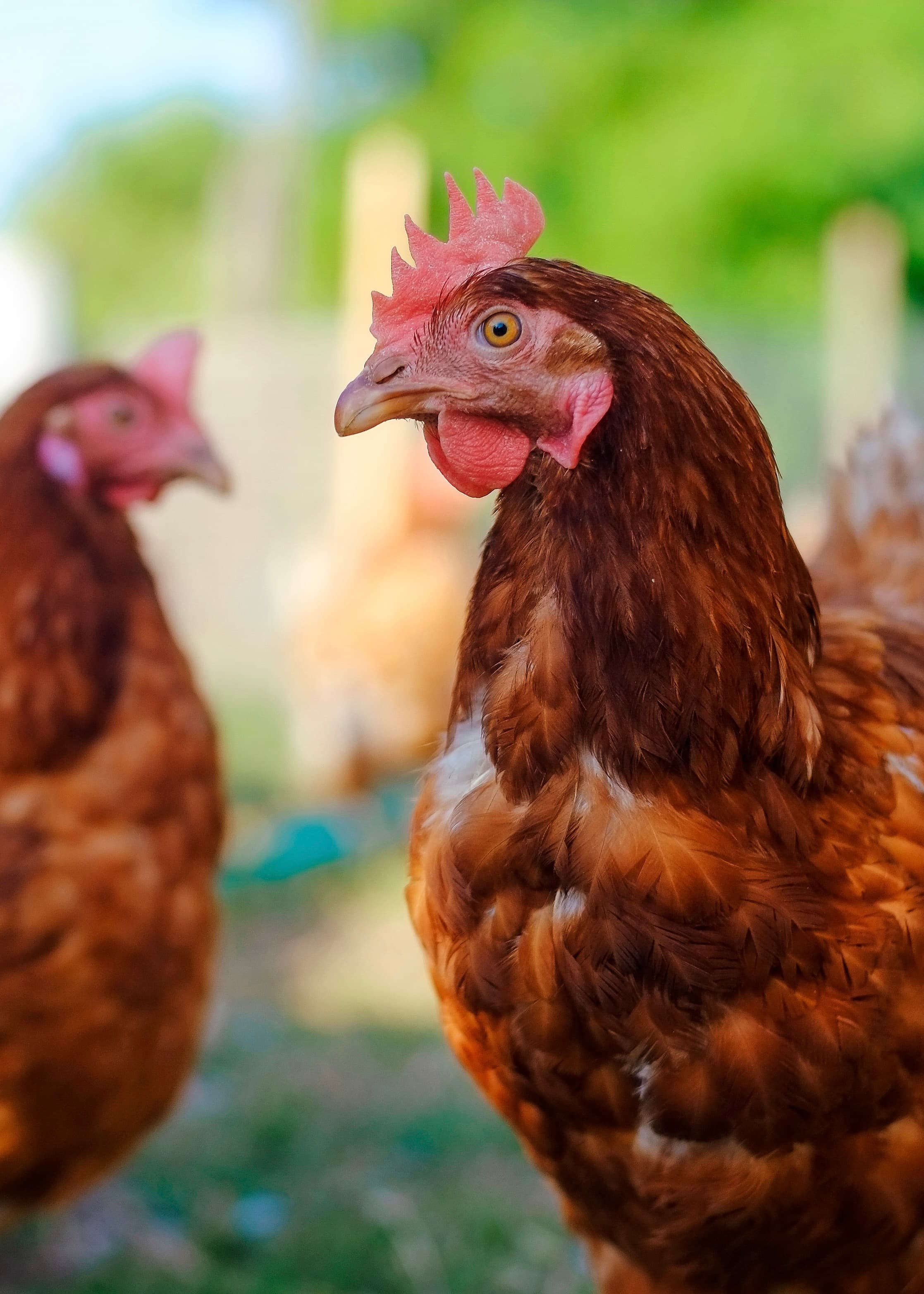
Egg
Quality you'll notice.
What you'll experience
Crack open a pastured egg and you'll see the difference. The yolk is plump and holds its shape. The colour is deep gold, sometimes almost orange, depending on the season and what the hens have been foraging. The white is firm, not watery.
This isn't marketing. It's what happens when hens eat a varied diet of grasses, insects, and forage alongside their feed. Carotenoids from fresh plants give the yolk its colour. A more complete diet produces a more complete egg.
From nest to tray
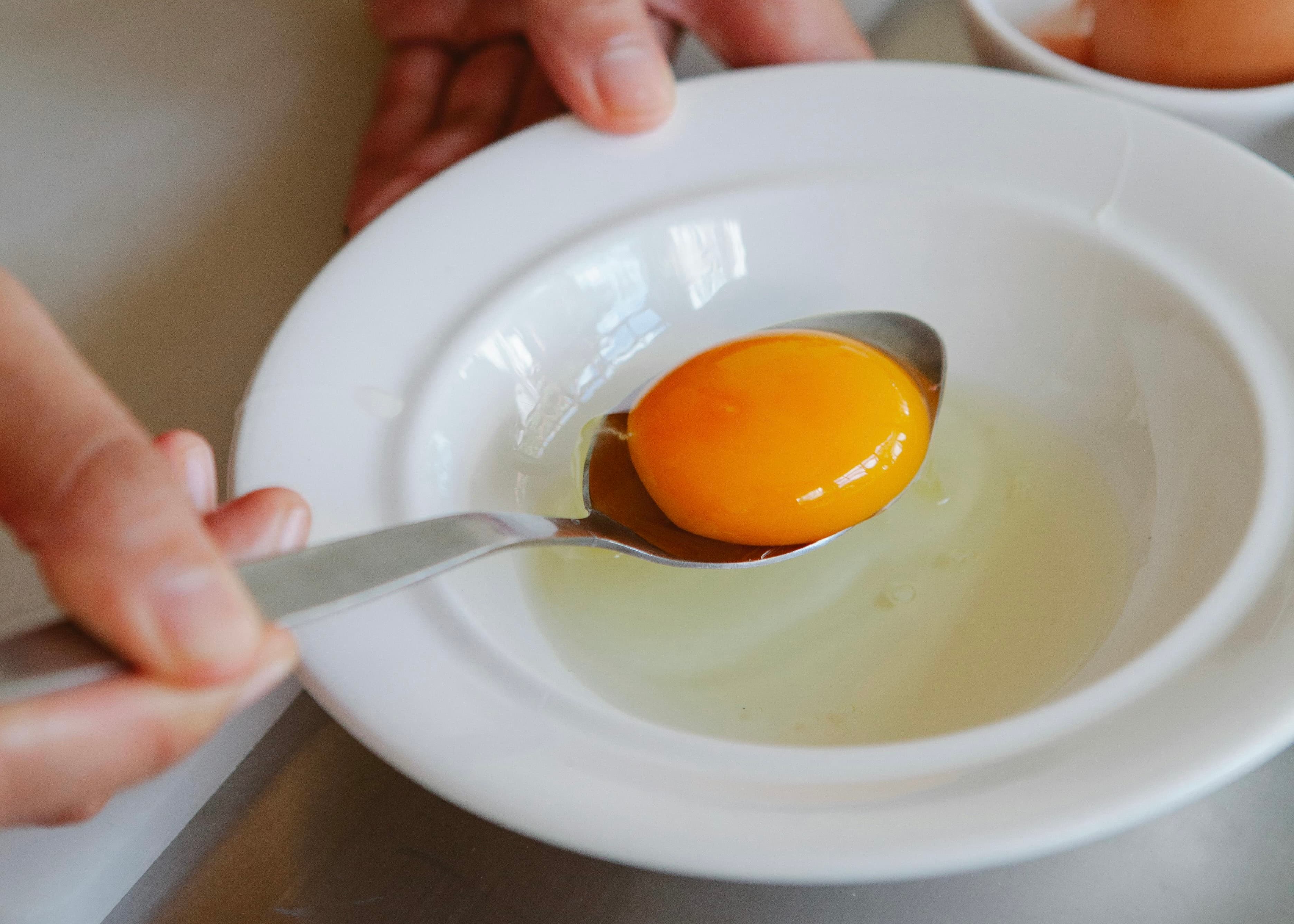
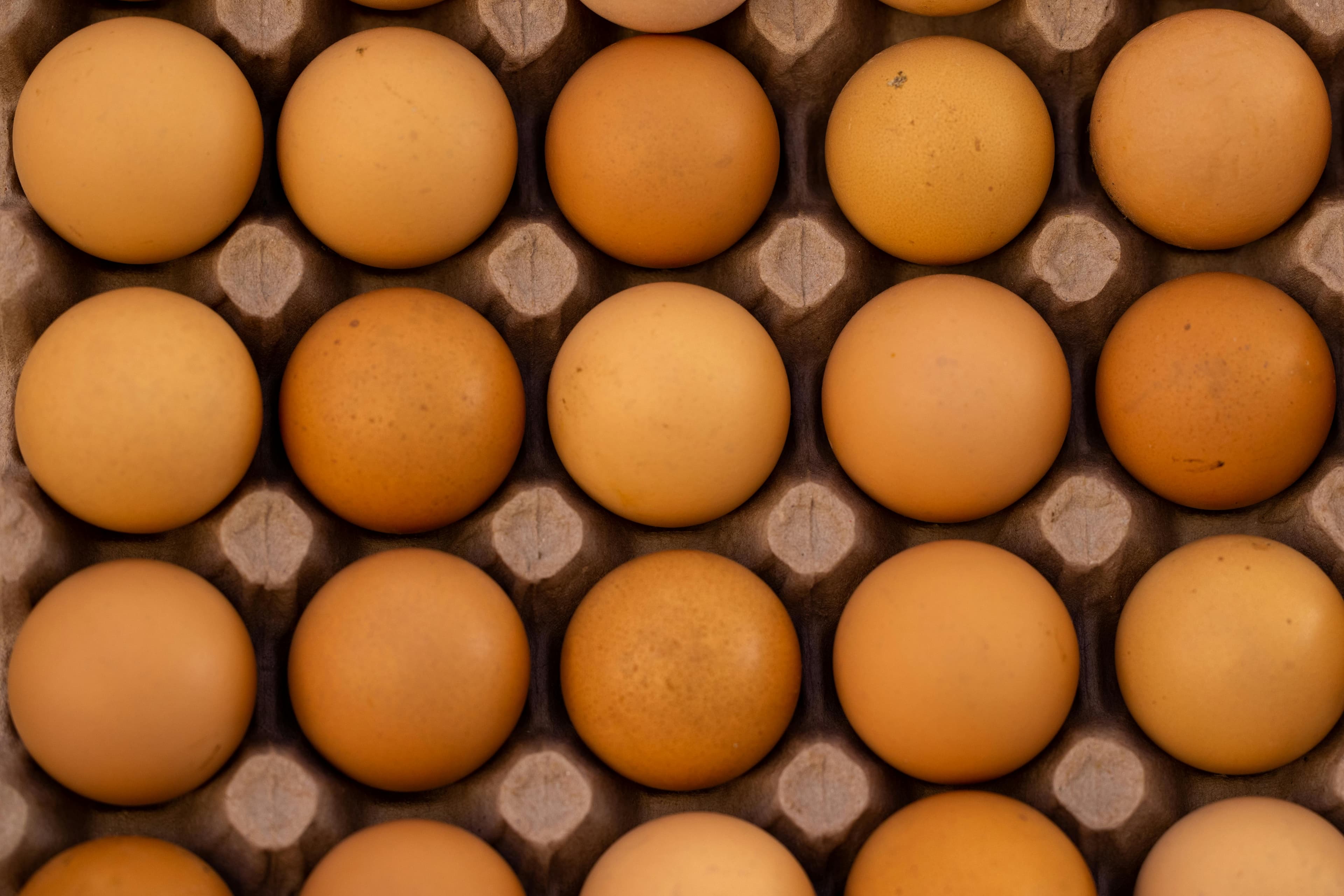
Eggs roll from the nest box into a protected conveyor and are collected daily. We grade every egg in our own facility using a Riva Selegg S21 grader. Each tray contains a mix of sizes, from S to XL. We prioritise animal welfare and production method over uniformity.
We sell eggs within 7 days of lay. The best before date is 28 days from lay. That's a short chain by any standard.
Freshness
Collected daily
Graded at our own facility using the Riva Selegg S21
Sold within 7 days of lay (our goal)
28-day best before date
Storing your eggs
Store eggs at consistent temperatures for up to one month.
Best if kept in a dark and dry environment approx. 15 °C.
Testing our claims
Research suggests pastured eggs contain higher levels of omega-3 fatty acids, vitamin A, and vitamin E. We plan to have our eggs independently tested once our first flock is laying, and we'll publish the results.
Until then, crack one open. You'll see and taste the difference before you read the data.
Hens
Healthy hens, honest eggs.
Our breed
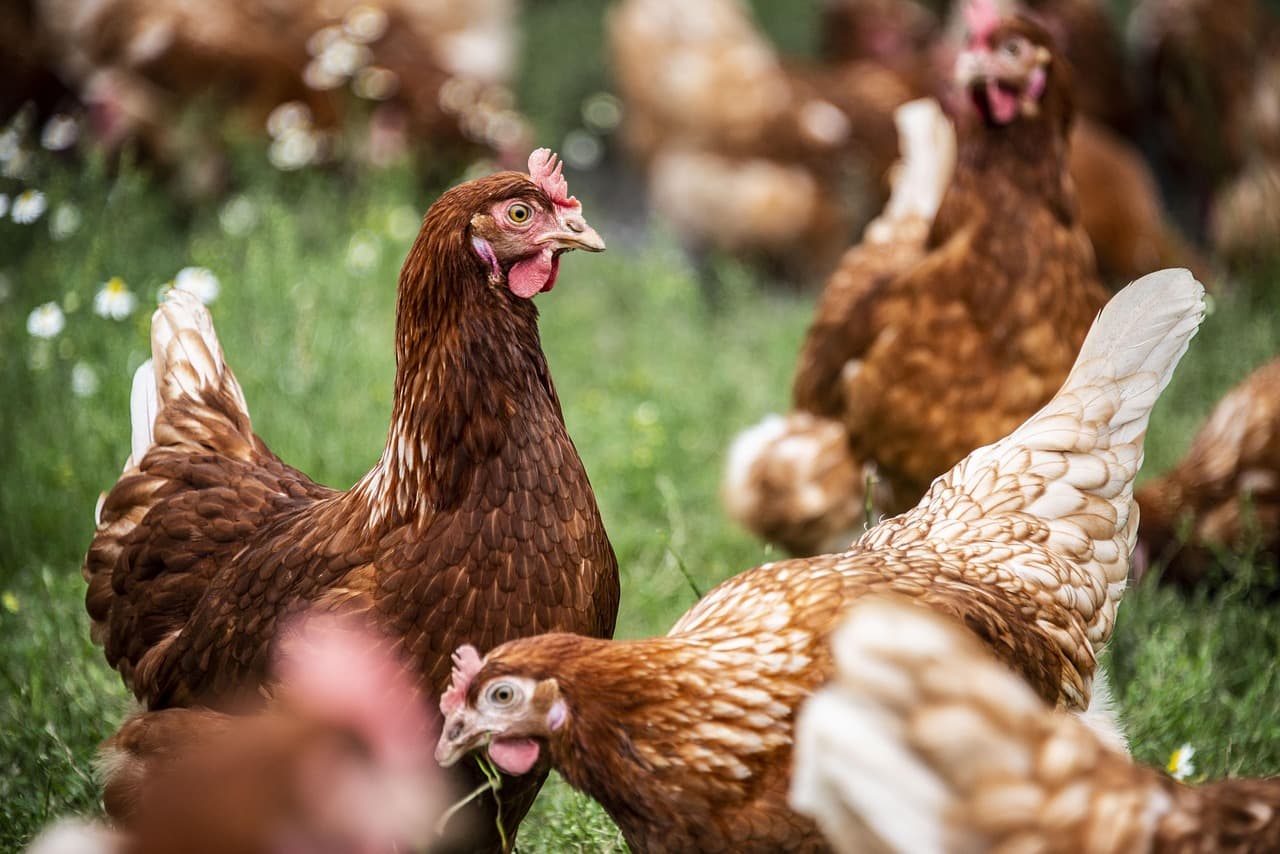
We raise Brown Nick hens, a hybrid selected for reliable lay rate and well-documented performance data. They are available in Finland from a certified hatchery and are well-suited to the mobile pasture systems. We keep our hens for two full grazing seasons.
Brown Nick
Hardy hybrid breed, reliable layer
Two grazing seasons per flock
Certified Finnish hatchery
Nothing hidden
Selectively vaccinated against common avian viruses
No antibiotics
No hormones
No artificial yolk colourants
Health and welfare
Hens that move to fresh ground daily encounter fewer parasites and less stress. Combined with lower stocking density and access to natural forage, this means healthier birds that rarely need intervention. When they do, we treat individually rather than medicating the whole flock.
Healthy hens produce better eggs. The nutritional profile of a pastured egg reflects what the hen ate and how she lived. We keep our practices visible so you can judge the connection between animal welfare and what ends up on your plate.
Coops
Housing that moves.
Mobile by design
Our hens live in mobile hoop coops designed in collaboration with Green Tools Tech. Each coop is a greenhouse-style structure mounted on skids, approximately 6 by 16 metres. They are fitted with automatic feeders and on-board water, and move across the pasture daily during the grazing season.
The hoop coop model was pioneered in Finland by Tuiskula Farm. Compared with open-range systems, this design allows birds to be fully enclosed when mandated by avian influenza regulations while maintaining light, airflow, and mobility.
Clean eggs by design
Each coop is fitted with a roll-away nest box system from Green Tools Tech. Hens lay in the nest box, and the egg rolls gently onto a protected conveyor belt. This keeps eggs clean from the moment they are laid and brings them to a single collection point for easy daily pickup.
The nest floors are slanted and self-levelling, so eggs roll clear of the hens and the system keeps working even as the coop crosses uneven ground on its daily move. This reduces cracked eggs, eliminates contact with bedding, and makes collection faster and more hygienic. It's one of the reasons we can maintain grading standards for commercial sale.
Built for Finnish regulations
Finnish avian influenza rules require all poultry to be kept in enclosed housing during spring migration, typically from February through May, to prevent contact with migratory birds. Our hoop coops are fitted with integrated net canopies that move with the coop. This means our hens can remain on pasture, on fresh ground, with natural light and airflow, even during housing mandates.
Feed
Every ingredient is a choice.
On pasture
From May through October, our hens forage on open pasture. Grasses, clover, insects, seeds. They can supplement up to 30% of their diet naturally from what they find on the ground. This variety is what gives pastured eggs their character: the deep yolk colour, the firm whites, the flavour.
Feed facts
Soy-free
Fish-free
Corn-free
Finnish-made (Rehux, Tarvasjoki — 38 km from farm)
Responsibly sourced regional grain
Responsibly sourced
Alongside forage, we provide feed from Rehux, a Finnish feed manufacturer based in Tarvasjoki. The feed is soy-free, fish-free, and corn-free. We cannot label it organic under Finnish regulations because our operation is not certified organic (as pasture poultry does not fit nicely into organic regulations), but the feed is responsibly sourced from regional grain suppliers.
Pasture
The land shapes the egg.
Daily rotation
From May through October, the coops move to fresh pasture every day. Each move gives the hens access to new ground with fresh grasses and insects. Behind them, the pasture recovers.
This is rotational grazing applied to poultry. Short occupation followed by long rest means manure is distributed in small doses across the whole grazing area rather than concentrated in one spot. The nitrogen and phosphorus feed soil microbes, which break organic matter into forms that grass roots can absorb. Rest periods allow root systems to deepen and leaf area to regrow, which improves water infiltration and builds organic matter over time. Scratching incorporates manure into the topsoil and breaks up thatch.
The result is pasture that grows back denser and more diverse after each rotation cycle. The hens improve the land they live on.
Stocking density
System designed for minimum 4 hens per m²
Lower than the 6 per m² under organic standards
More space, less stress, healthier pasture
A year with our hens
Each flock follows the same rhythm. It starts at a hatchery in January and ends, two grazing seasons later, on our farm.
January
Hens hatched at certified hatchery
Chicks raised together until ready for our farm
May
Arrive on farm at 16-18 weeks
Fully feathered, not yet laying
June
First eggs
The flock begins laying at around 22 weeks of age
May to October
Daily pasture rotation
Fresh ground daily. Pasture recovers behind them. Manure distributed evenly.
Following autumn
Flock retired after two grazing seasons
Longer than industry standard. Exploring spent hen food products.
Order
From our farm to your table.
Buy as you go.
We sell while supplies last, at the farm kiosk and at every stop we make.
Free choice
Trays of 30 or cartons of 10, no commitment. Stop by our self-service farm kiosk in Kuusjoki (daily 7 to 21), or catch us at a collection point, your REKO ring, or a popup while extras last.